
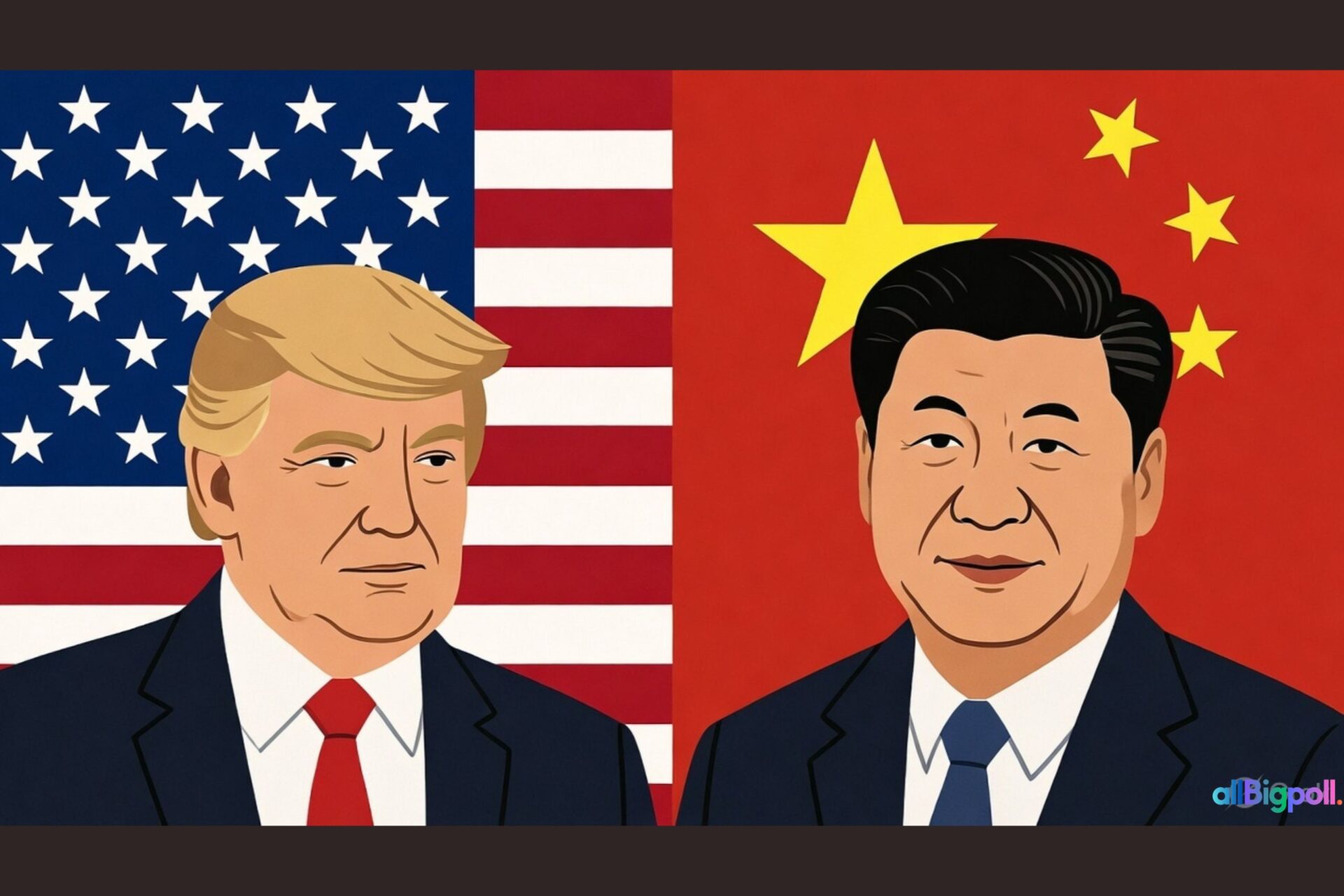

Both the United States and China offer distinct models of international governance, each accompanied by specific strengths, strategic liabilities, and varying levels of global confidence.
US vs. China: Who Does the World Really Trust?
Note: Allow only one vote per device
Ultimately, trust in either nation depends on whether an observer prioritizes institutional security guarantees and political freedoms, or developmental investment and economic statecraft.
The United States: The Rules-Based and Alliance-Centric Model
Advocates for U.S. leadership point to institutional norms, military alliances, and financial centrality:
- Institutional Alliances: The U.S. maintains longstanding multilateral security frameworks (e.g., NATO, AUKUS, bilateral treaties with Japan and South Korea) designed to deter regional aggression and uphold collective defense.
- Democratic Values and Rule of Law: U.S. leadership emphasizes transparent legal norms, civil liberties, open financial markets, and the reserve status of the U.S. dollar, which underpins global capital flows.
- Technological and Economic Innovation: American institutions lead the development of frontier technologies, including commercial artificial intelligence, aerospace, and biomedical research.
China: The Infrastructure and Development-Centric Model
Advocates for China’s leadership emphasize developmental pragmatism, manufacturing capacity, and non-interference:
- Infrastructure and Tangible Investment: Through initiatives like the Belt and Road Initiative (BRI), China has financed and built critical transport, logistics, and energy infrastructure across the Global South.
- Non-Interference Doctrine: Beijing’s stated diplomatic model avoids conditioning commercial partnerships or loans on political reforms, human rights benchmarks, or governance styles, which appeals to many developing nations.
- Industrial Scale and Green Transition: China dominates the global supply chains for clean technologies, including solar energy, battery storage, and electric vehicles, making it central to decarbonization efforts.
Global Sentiment in 2026
International polling reveals significant geographic divergence in how both nations are viewed:
- Global South and Non-Aligned States: In parts of Southeast Asia, Africa, and Latin America, China often registers competitive or higher approval ratings due to direct commercial investment and trade relationships.
- Developed Democracies and Bordering Neighbors: Across Western Europe, Japan, South Korea, India, and the Philippines, public trust heavily favors the U.S. model, largely driven by shared democratic values and concerns over Beijing’s regional assertiveness.
Ultimately, trust in either nation depends on whether an observer prioritizes institutional security guarantees and political freedoms, or developmental investment and economic statecraft.